Why We Buy the Fifth Pack of Paprika: The Komora Manifesto
We are drowning in things but don't know what we own. How to turn chaos into a digital system and why we need 'Slow Inventory'.
I am tired of buying things I already own.
Last month, I bought a set of metal drill bits. I came home, opened my toolbox… and found exactly the same set, still in its packaging, which I had bought six months ago.
It wasn’t just wasted money. It was a feeling of losing control.
We live in the era of “fast consumption.” 15-minute delivery, “buy with one click,” endless scrolling of new products. But no one has built a proper system for “slow things” — the items that stay with us for years.
The “Black Hole” Problem
Our closets, garages, attics, and medicine cabinets are black holes. Things go in, and they disappear. The event horizon is the cabinet door.
- Why do we buy the fifth pack of paprika? Because we don’t remember it’s sitting in the second row.
- Why don’t we know what to take for a headache? Because the meds are piled in an old shoebox, and the instructions are long lost.
- Why do we buy a new HDMI cable? Because it’s easier to spend $5 on a new one than to spend an hour searching for the old one in “that cable box.”
The Slow Inventory Philosophy
I built Komora not as another to-do list app. It is an operating system for your belongings. It is based on three simple but radical principles:
1. Camera Beats Keyboard
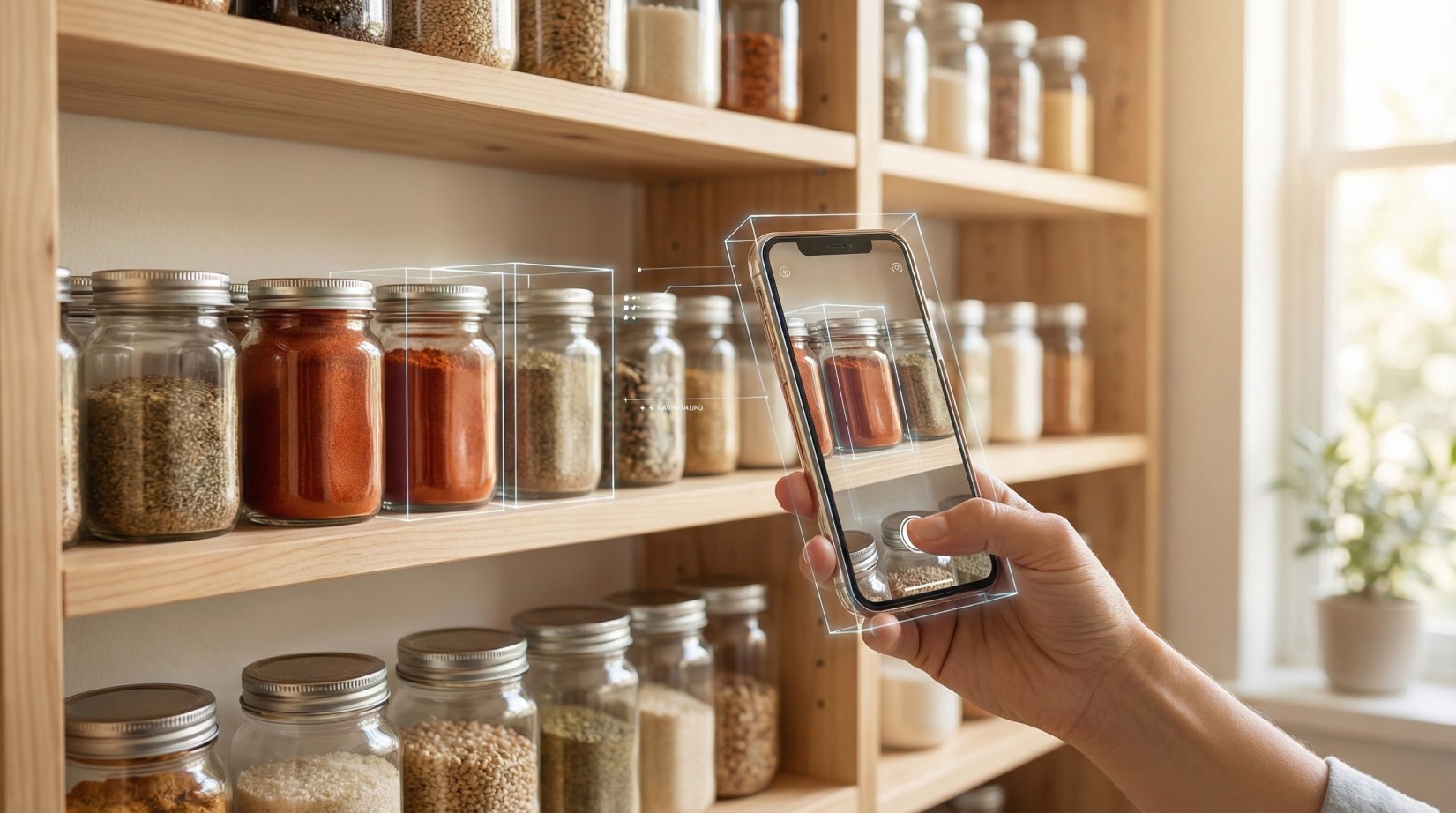
Typing “Phillips screwdriver PH2” manually on a phone is hell. No one is going to do that. In Komora, you simply point the camera at a shelf. Snap 10 photos in a row. Artificial Intelligence sorts through the clutter: “This is a drill,” “This is Ibuprofen,” “These are Nike sneakers.”
2. Things Are Data
When a physical object becomes a digital record, it gains the properties of a file. It becomes searchable. Filterable. Shareable via a link. You no longer search physically. You search digitally, and then go to the exact location.
3. Context for Intelligence
This is the game-changer. Knowing you have rice, chicken, and tomatoes is passive knowledge. But if you hit “Context Export” and drop that list into an AI, it becomes active: “Cook a risotto, here is the recipe.” If you drop your medicine list, it says: “For your symptom, this is suitable, but check the expiration date.”
Re-focus
Version 1.1 is now available. We cut out the noise and focused on the core mission: turning your belongings into a useful asset.
Try photographing your medicine cabinet tonight. It will take 5 minutes. But you will be surprised how much mental space you free up and how much money you save tomorrow.